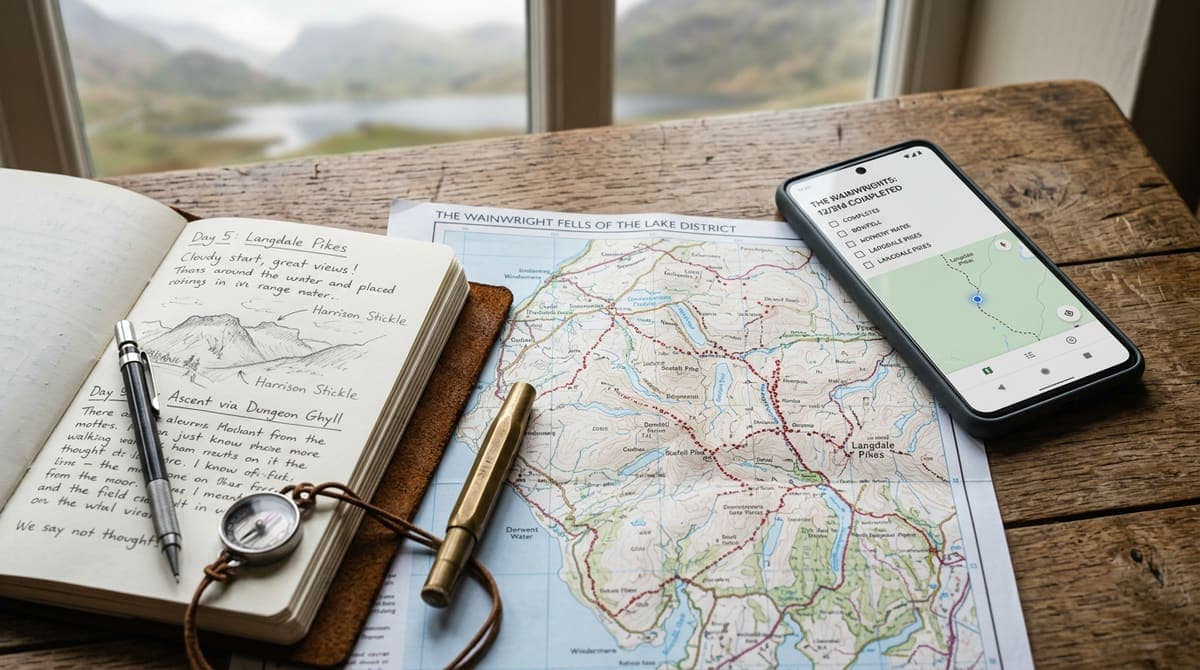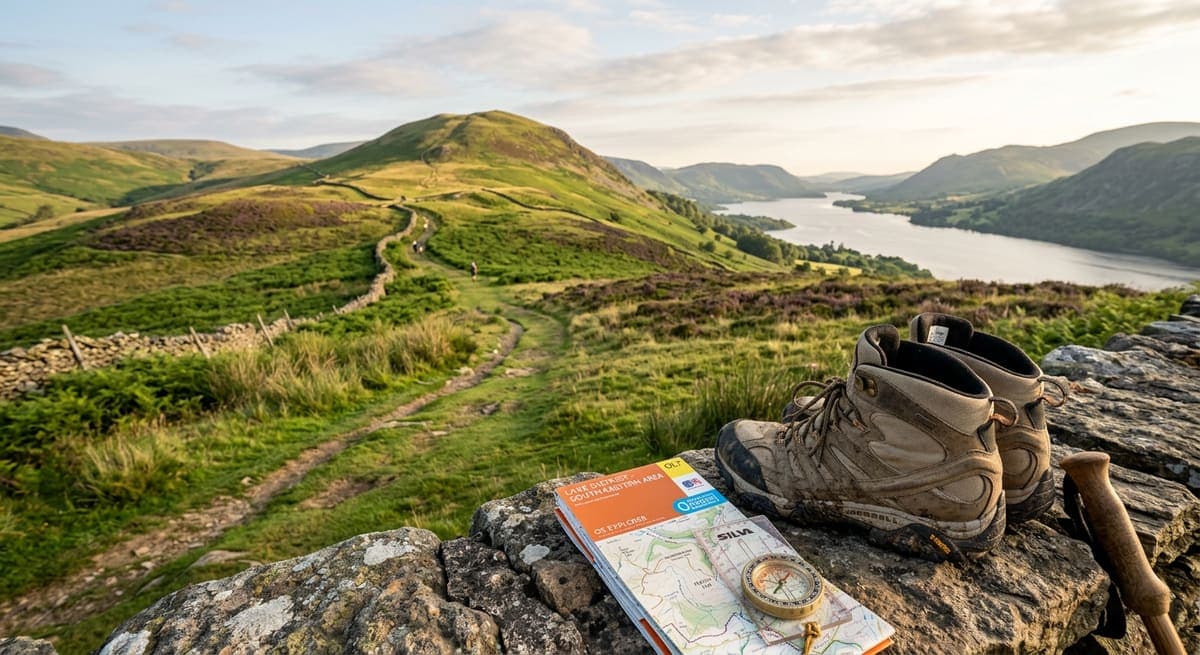
The easiest Wainwrights are not always the lowest hills, the shortest walks or the names that turn up most on social media. A good first fell gives you a proper Lake District day without pushing you onto exposed ground, into confusing navigation or down a long descent on tired legs. Start with confidence, and let the harder ridges wait their turn.
This guide is for walkers starting the 214, coming back after time away, or helping a friend choose a sensible first outing. Treat it as a shortlist, not a route guarantee. Weather, daylight, path condition, transport, fitness and navigation still decide whether any fell is right on the day.
The short answer
Good first Wainwrights include Latrigg, Castle Crag, Loughrigg Fell, Hallin Fell, Sale Fell, Ling Fell, High Rigg, Gowbarrow Fell and Binsey. Pick one, check the mountain forecast, and keep any nearby tops as optional extras.
How to judge an easy Wainwright
Beginner-friendly means manageable, memorable and easy to place on the map. Distance matters, but ascent often matters more. A compact fell can still feel hard if the climb is steep, wet or pathless. A longer low-level approach may be calmer if it follows clear tracks, gives simple ways back and avoids committing ridges. The best first Wainwright is the one you can finish with enough attention left for the descent.
| Check | Why it matters | Good beginner sign |
|---|---|---|
| Clear approach | Spend your energy on the hill, not on finding the car park. | An obvious start from a village, a pass or a recognised path. |
| Modest ascent | Climb changes the effort more than mileage. | Rounded slopes and short pulls, with no need to rush extra summits. |
| Simple navigation | Mist makes even small fells feel different. | Clear paths, strong landmarks and a paper or offline map as backup. |
| A way back | Beginners need permission to shorten the day. | An easy return line before any ridge or high plateau. |
| Isolated, not clustered | Nearby tops tempt you to overextend the walk. | One summit as the walk; anything else stays optional. |
Nine gentle fells for a first shortlist
Latrigg is the classic Keswick starter: modest, familiar and rewarding, with views across the town and Derwent Water when the cloud lifts.
Castle Crag gives a compact Borrowdale day with a distinctive summit and a strong sense of place. It is the lowest of all 214, but its top is rocky and deserves care. Loughrigg Fell, between Ambleside, Grasmere and Rydal, suits walkers who want low height, varied paths and fine views, though its web of tracks still needs careful navigation.
Hallin Fell above Ullswater is short, shapely and satisfying in good weather. Sale Fell and Ling Fell in the North Western Fells are quieter choices with rounded profiles, useful if you want space away from the busiest valleys. High Rigg is a lovely low ridge near St John's in the Vale, but its up-and-down ground can feel longer than expected. Gowbarrow Fell gives Ullswater views and flexible route choices. Binsey, standing apart on the northern edge of the Lakes, is a gentle introduction to map reading without bigger neighbours pulling you on.
- Town-side starter: Latrigg, if you are based around Keswick.
- Compact Borrowdale summit: Castle Crag, with a proper summit feeling.
- Flexible low fell: Loughrigg Fell, provided you follow the paths carefully.
- Short Ullswater summit: Hallin Fell, on a clear, settled day.
- Quieter northern options: Sale Fell, Ling Fell, High Rigg or Binsey.
Easy fells to treat with respect
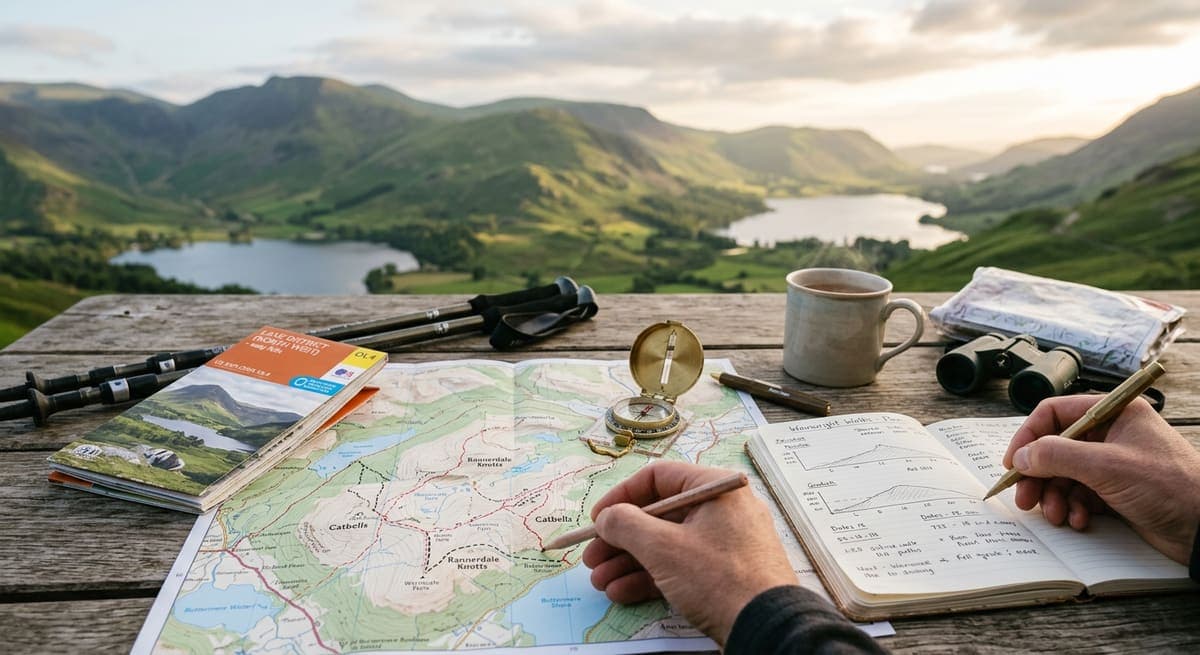
Catbells appears on nearly every beginner list, and it can be a wonderful fell, but popularity does not make it trivial. The ridge is busy, parking can be awkward, and some walkers find the steeper rocky steps more exposed than they expected. Walla Crag can also feel simple from Keswick, yet wet stone, woodland paths and changing visibility still deserve attention. Treat famous easy fells as real fell walks, not errands.
Avoid turning a first outing into a numbers day. The map will tempt you with nearby tops, especially around Loughrigg, High Rigg, Sale Fell and Ling Fell. Keep extensions as optional notes rather than promises. If the first summit gives you enough, log it and leave the next fell for a better forecast. The 214 is a long project; learning restraint early is part of the craft.
A beginner-friendly Wainwright is not the easiest name on a list. It is the fell that matches today's weather, daylight, legs and navigation.
Read the map before you pick
A useful map for easy Wainwright walks does more than scatter pins across the Lake District. It shows clusters. A beginner looking at Latrigg, Castle Crag, Loughrigg Fell, Sale Fell, High Rigg or Hallin Fell needs to know where each hill sits, which valley or car park it belongs to, and whether its neighbours could turn a gentle morning into a much harder day.
Start with geography, not a trophy list. Group the fells by valley and by the base you can reach easily. Read a proper route description, then come back to the Wainwright map to see how that summit fits your wider round. That stops random ticking, where your finished fells end up scattered across the Lakes with no memory of why you chose them.

Easy does not mean navigation-free
The most common beginner mistake is treating easy Wainwrights as park walks. Some sit close to towns, cafés and popular paths, but they are still fell country. Mist can erase landmarks. Wet rock changes the character of a descent. A quiet shoulder that looked obvious on a phone screen can feel different when the path fades into grass. The map helps you choose; it does not walk the route for you.
Before you set off
- Read the Met Office mountain forecast for the Lake District and check daylight times.
- Plan the route on OS Maps or a paper Ordnance Survey map, and carry it.
- Read the Lake District National Park walking advice and AdventureSmart before your first few days.
- Pack layers, waterproofs, food, water and a head torch, whatever the forecast says.
A simple plan for your first five
Plan the first five by area rather than by ambition. Choose one base, open the Wainwrights Baggers map, and look around a valley you can reach easily. Pick one main objective and add a nearby fell only as a bonus. Before you leave, write a short plan: start point, intended line, weather concern, latest turn-back time.
After each walk, update the journal while the day is fresh: the date, the route, the weather, who came with you, what went wrong and a photo or two. That record helps future planning more than a bare tick. It also shows patterns: which ground you enjoy, which areas need more time, and when you are ready to move from rounded starter fells to longer days in the Central, Western or Far Eastern Fells.
Common mistakes on easy fells
- Chasing a list copied from the web without asking whether that fell suits today.
- Joining too many nearby summits because the map makes them look close.
- Forgetting the descent: tired legs make the way down feel longer.
- Not logging failed or shortened days, though those notes help the next plan.
- Treating phone signal as a plan rather than a bonus.
Fells in this guide
- Latrigg369 m · Book 5
- Castle Crag290 m · Book 6
- Loughrigg Fell335 m · Book 3
- Hallin Fell388 m · Book 2
- Sale Fell359 m · Book 6
- Ling Fell374 m · Book 6
- High Rigg356 m · Book 3
- Gowbarrow Fell481 m · Book 1
- Binsey447 m · Book 5
- Catbells451 m · Book 6
- Walla Crag379 m · Book 3